
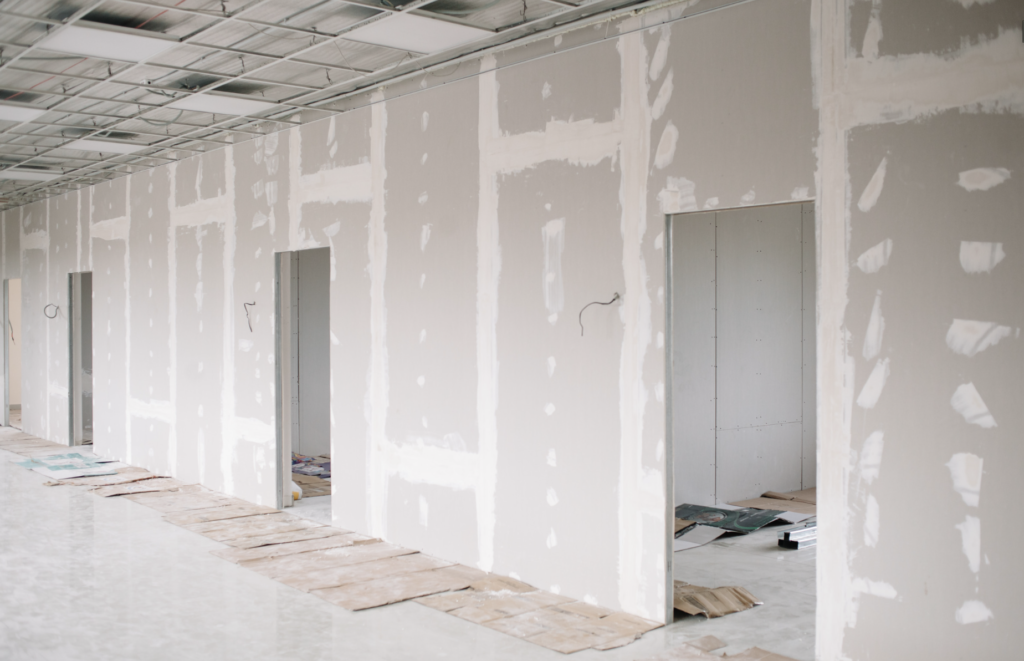
Industrial partitioning and warehouse partition walls are one of the quickest ways to turn a single open unit into purposeful, compliant space without the cost and downtime of a full rebuild. For factories and warehouses, that can mean cleaner workflows, safer routes, tighter access control and far better use of your footprint.
Whether you need dividing walls for new office space, a secure stock cage, a clean production area or a quiet QC zone, the right partitioning systems can change how your building performs day to day. The key is choosing partitioning solutions that match your risks, your operations and your future plans, then having a team that can supply and install to a high standard with minimal disruption.
Key Takeaway
If you want industrial spaces to run better, start with the “performance brief” before you choose materials: fire strategy, hygiene, noise, security and future flexibility. Get those right, then match the partition wall systems to the job.
Why Industrial Partitioning Matters In Real Operations
Most sites do not suffer from “not enough space”. They suffer from space used in the wrong way. Industrial partition systems let you restructure a work environment so people, product and paperwork stop competing for the same area.
Common drivers we see across factory warehouse settings include:
- Creating office space without losing valuable floor area
- Separating noisy or dusty processes from admin or packing
- Containing temperature drift or drafts near loading doors
- Reducing cross-traffic between pedestrians and MHE routes
- Securing high value inventory and restricting access
That is where cost effectiveness comes from. It is not just the partition itself. It is the wasted time, rework and near misses you remove when the layout finally supports the job.
Choosing The Right Partitioning System
We offer a range of options because no two partitioning projects have the same constraints. A warehouse partition might be driven by security and speed, while factory partitioning might be driven by hygiene and fire ratings.
The Brief We Start With
Fire Strategy And Fire Ratings
Before we specify anything, we look at escape routes, compartmentation needs and what the space will be used for. A steel partition wall or a tested board system can be required depending on your target fire ratings and how the area connects to the rest of the building.
Hygiene And Cleaning
If the area needs wipe-down standards, you need surfaces, joints and detailing that support cleaning. That can mean smooth, durable linings and impact protection in high contact zones.
Acoustics And Privacy
Glass and solid options can both work here. The question is what level of speech privacy and noise control you actually need, then selecting the build-up that achieves it.
Security And Access
A fencing system inside a building, mesh fencing, a lockable pedestrian gate and controlled access points are often the fastest way to create secure zones around stock, tools or restricted processes.
Flexibility For Future Changes
Movable walls, demountable systems and modular layouts are often the smartest choice when you are expecting growth, new processes or a potential tenant change.
How Partitioning Is Fitted With Minimal Disruption
A good outcome depends on sequencing, coordination and site control as much as the materials. On busy sites, we plan partition wall systems around real workflows, deliveries and shift patterns.
A typical approach looks like this:
- Survey and set-out with clear lines, heights and access points
- Agree services routes early, including power, data, ventilation and fire detection
- Protect live operations and create safe work zones with controlled access
- Install structure and panels in logical bays to keep routes open
- Finish details properly, doors, trims, seals and interfaces to floors and ceilings
- Walk-through sign-off so you know what is in place and how to maintain it
This is where experienced professionals add value. The installation is only “quick” if it is also organised.
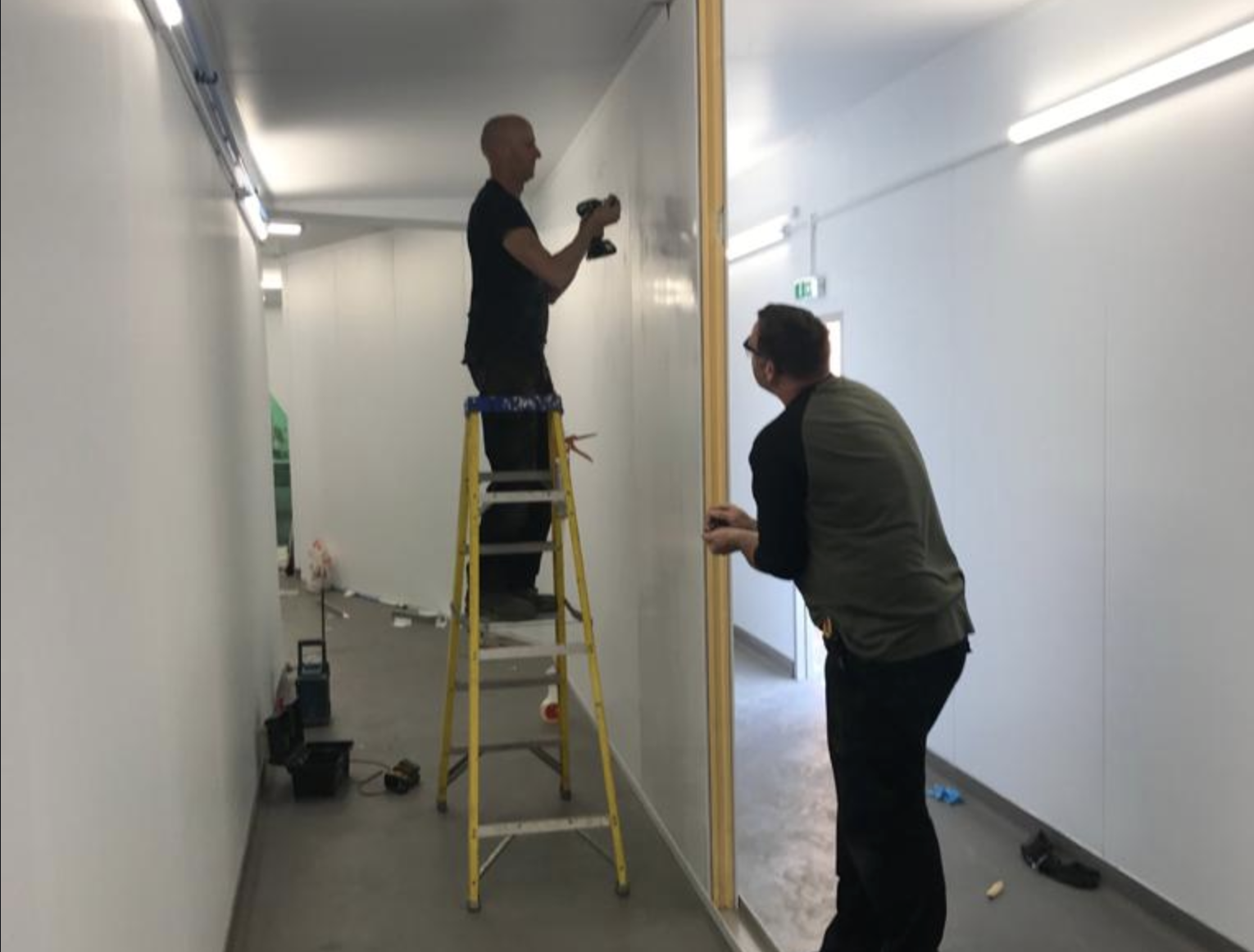
Warehouse Partition Walls: Creating Zones That Work
Warehouse partition walls are often sold as a simple way to “split the shed”. In practice, the difference between a useful split and a daily headache comes down to flow.
We design around:
- Forklift turning circles and pallet drop points
- Pedestrian routes and safe crossings
- Door positions so teams are not fighting bottlenecks
- Security layers for higher value stock
- Space for future racking, packing benches or added office space
If you are sub-letting areas, solid partitioning can create a clearer boundary and better privacy for each occupier. If you are running mixed operations under one roof, hybrid partitions can help you keep oversight while still controlling noise, access and process separation.
Why Choose Octego
With over 40 years in commercial and industrial fit out, we bring practical site thinking to every partitioning job. We work with a wide range of suppliers and manufacturers, then tailor the system to your intent, not the other way round.
Because we also deliver wider building solutions, we can coordinate partitioning with your broader plans, whether that is warehouse refurbishment, cold rooms, washrooms, fencing or all building works.
If you are considering industrial partitioning or warehouse partition walls, speak to our team on 01444 405269.
Looking for another great blog to read? You should try: Cladding Boards for Clean, Compliant Interiors.
FAQs
What Is Industrial Partitioning In A Factory Or Warehouse Setting?
Industrial partitioning is the use of purpose-built partitioning systems to divide industrial spaces into functional zones such as offices, production areas, storage bays, clean areas or secure cages. It helps control access, reduce cross-traffic, improve safety and create a more organised work environment without rebuilding the whole unit.
What Are Warehouse Partition Walls Typically Used For?
Warehouse partition walls are commonly used to create secure stock areas, separate packing from goods-in, build office space inside a warehouse or split units for multiple occupiers. The best layouts are designed around workflow, forklift routes, fire strategy and future changes such as new racking or expanded operations.
Which Partitioning System Is Best For Factories And Warehouses?
The best partitioning system depends on what the area needs to achieve, security, fire ratings, hygiene, noise control or flexibility. Options include stud and board, insulated panels, glass partitions and mesh fencing systems, and each suits different locations and levels of wear.
How Long Does Industrial Partitioning Take To Install?
Most industrial partitioning projects can be installed quickly once set-out and services coordination are agreed. Timescales depend on height, complexity, fire requirements, doors and any electrical, data or ventilation changes, but experienced installers can phase the work to keep operations moving.
Can Industrial Partitioning Be Installed With Minimal Disruption?
Yes, if the work is planned around deliveries, shift patterns and safe access routes. A phased approach, clear work zones and smart sequencing allow partition wall systems to be fitted with minimal disruption, especially in live factories and warehouses.
Do Warehouse Partition Walls Need Fire Ratings Or Building Control Input?
They can do. If the partition affects escape routes, compartmentation or creates new rooms with different risks, fire ratings and compliance checks may be required. It is best to confirm requirements early so the partitioning solutions meet the correct building regulations for your site.
What Materials Are Commonly Used For Industrial Partition Systems?
Common materials include galvanised or steel framing, plasterboard or fire-rated boards, insulated composite panels, toughened glass for office areas and mesh panels for security zones. The right material choice depends on impact risk, cleaning needs and whether the area is temperature controlled.
Are Mesh Fencing And Cages Considered Industrial Partitioning?
Yes. Mesh fencing systems are a popular type of industrial partitioning for secure storage, tool cribs and controlled access areas. They are often quicker to supply and install than solid walls and work well when visibility and airflow are still important.
How Do You Design A Warehouse Partition That Will Still Work In Two Years?
Start with flow, not floor plans. A future-proof warehouse partition considers forklift turning space, pedestrian routes, access points, racking growth, security layers and potential tenant changes. Demountable or modular partitioning systems can also make later changes far easier and more cost effective.
Why Use A Specialist Contractor For Industrial Partitioning?
Specialist contractors understand how partition wall systems interact with real site conditions, live operations, fire strategy and services. That means fewer delays, cleaner finishes, safer sequencing and a better result, particularly when you need bespoke solutions for factories and warehouses.
Updated February 2026