
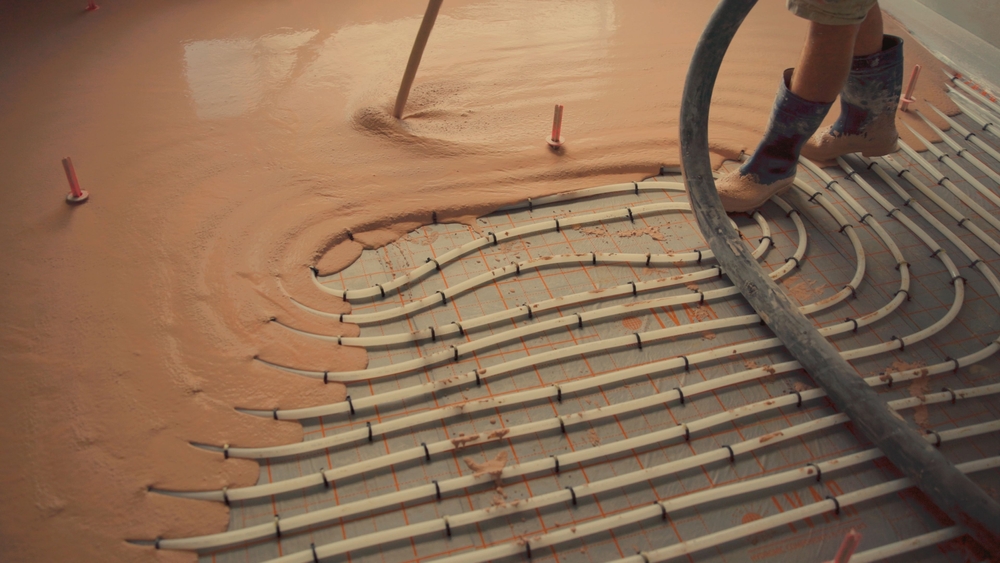
Liquid floor screed has become a widely used flooring solution in commercial and industrial refurbishment. When applied correctly, it creates a level, durable surface that supports modern flooring systems and heating installations. For warehouse units, offices, and production areas, the quality of the screed layer directly affects the performance and lifespan of the final flooring finish. In the words of Lionel Richie, if it’s screed you’re looking for, then read on.
Quick Summary
Liquid floor screed is a self-levelling, cement-based material used to create smooth, durable subfloors in commercial buildings. It flows easily across a prepared area, filling voids and producing a consistent surface that is ready for flooring installation after drying. Compared with traditional cement screed, it installs faster, improves level accuracy, and works particularly well with underfloor heating systems. Professional preparation, priming, and curing are essential to achieve a long lasting flooring finish.
What Is Liquid Floor Screed?
Liquid floor screed is a flowing levelling screed designed to produce a smooth and consistent base layer over concrete floors. Unlike traditional cement screed, which is hand laid and compacted, liquid screed is pumped onto the floor and naturally spreads across the surface.
This flowing consistency allows the screed to settle evenly and fill small voids. The result is a highly level surface that can support a wide range of floor coverings.
Liquid screeds used in commercial buildings are typically cement based and formulated to provide strength, durability, and compatibility with modern building systems such as underfloor heating.
At Octego, we frequently specify liquid floor screed during warehouse refurbishment and commercial fit outs where accurate floor levels and consistent finishes are essential.
Why Commercial Buildings Benefit From Liquid Screed
In many industrial buildings, floor surfaces are rarely perfectly flat. Small undulations in concrete floors can cause problems for shelving systems, machinery placement, and final flooring finishes.
Liquid screed helps solve this by creating a uniform levelling layer.
The main advantages include:
- Excellent self-levelling properties
- Faster installation across large areas
- Reduced labour compared with traditional cement screed
- Consistent thickness and finish
- Compatibility with underfloor heating systems
- Improved surface preparation for resin floor screen or other specialist coatings
For commercial property owners, this means a reliable base that improves the performance of the final flooring system.
How The Installation Process Works
Installing liquid floor screed is a controlled process that begins well before the material is pumped onto the floor. Surface preparation is critical to achieve proper bonding and durability.
A typical installation follows these stages:
- Preparing the concrete floors and cleaning the prepared area
- Applying an epoxy primer to promote adhesion
- Installing edge insulation and expansion detailing where required
- Pumping the liquid screed evenly across the floor surface
- Allowing the screed to settle and self level naturally
- Leaving the floor undisturbed during the early curing phase
Once applied, the screed begins to harden quickly. Many liquid screed systems can be walked on within 24 hours, although this varies depending on screed thickness and environmental conditions.
Full curing takes longer, and the floor must reach suitable moisture levels before installing the final flooring finish.
Liquid Screed And Underfloor Heating Systems
One of the main reasons liquid screed has become popular in commercial projects is its performance with heating systems installed beneath the floor. Traditional cement screed can leave small air gaps around heating pipes, these gaps reduce heat transfer and create uneven floor temperatures.
Liquid screed flows around pipework completely, producing full contact between the heating system and the screed layer. This improves thermal efficiency and allows heat to distribute evenly across the floor surface.
For commercial offices, workshops, and light industrial spaces, this can improve comfort while reducing energy consumption.

Typical Drying And Curing Expectations
Drying time depends on several factors including screed depth, temperature, and ventilation. As a general guide:
| Stage | Approximate Time |
| Light foot traffic | 24 hours |
| Initial drying stage | 48 hours |
| Full curing period | Several weeks depending on depth |
| Ready for final flooring | When moisture levels reach specification |
Professional moisture testing is normally required before installing final surfaces such as vinyl, tile, or resin floor screen systems.
When Resin Flooring Is Installed Over Screed
Many commercial buildings combine liquid floor screed with specialist coatings such as resin flooring. A properly prepared screed layer provides the ideal base for these finishes.
Why Preparation Matters For Resin Flooring
Resin systems rely heavily on surface preparation. Before installing a resin floor screen coating, the screed surface must be:
- Clean and dust free
- Fully cured
- Mechanically prepared if required
- Primed correctly for the coating system
When done correctly, the combination of liquid screed and resin flooring can create a slip resistant and extremely durable floor surface suitable for warehouses, production spaces, and commercial facilities.
When Liquid Floor Screed Is The Right Solution
Liquid floor screed is particularly useful when projects require:
- Large floor areas to be levelled efficiently
- Integration with underfloor heating
- High accuracy floor tolerances
- Preparation for specialist flooring finishe
- Fast installation in refurbishment programmes
At Octego, we regularly install levelling screed as part of wider warehouse refurbishment and commercial interior projects. The screed layer often forms a critical stage in preparing industrial units for their final operational use.
Correct preparation, priming, and curing are essential to achieve the expected durability and performance. When installed professionally, liquid screed provides a stable, reliable base for modern commercial flooring systems.
If you liked this, you may also like: Commercial Building Renovation And Warehouse Refurbishment
Get in touch with the team on 01444 405269 and find out how we can help you and your project.
Frequently Asked Questions
What is screed?
Screed is a layer of material applied over a structural floor, usually concrete, to create a smooth and level surface. It forms the base for the final flooring finish such as tile, vinyl, carpet, or resin flooring. Screed can also contain heating pipes when underfloor heating systems are installed. The purpose of screed is to improve floor level accuracy, durability, and performance before the finished surface is applied.
What is liquid screed?
Liquid screed is a flowing form of levelling screed that is pumped onto the floor and spreads naturally across the surface. Because it is self levelling, it produces a smooth and consistent finish with less manual labour than traditional cement screed. Liquid screed is commonly cement based and is widely used in commercial buildings where accurate floor levels and fast installation are required.
What is the difference between liquid screed and traditional cement screed?
Traditional cement screed is mixed and manually spread across the floor before being compacted and levelled by hand. Liquid floor screed is pumped onto the prepared area and flows naturally to create a level surface. Liquid screed often provides better level accuracy and faster installation, especially across large commercial floor areas.
How long does liquid floor screed take to dry?
Liquid floor screed usually becomes walkable after around 24 hours. Early drying often occurs within the first 48 hours, although the screed will continue to cure for several weeks. The exact drying time depends on the screed thickness, temperature, humidity, and ventilation conditions within the building.
When can flooring be installed after screed is laid?
Final flooring finishes can only be installed once the screed has reached the correct moisture level. This is usually confirmed through professional moisture testing. Depending on thickness and conditions, this can take several weeks after installation.
Is liquid floor screed suitable for underfloor heating?
Yes. Liquid floor screed works particularly well with underfloor heating systems. The flowing material surrounds heating pipes completely, which improves heat transfer and helps produce more consistent floor temperatures across the space.
Can resin flooring be installed over liquid screed?
Yes. Liquid screed can provide a suitable base for resin flooring systems when it has fully cured and been properly prepared. The surface must be clean, dry, and primed correctly before applying resin coatings to ensure proper adhesion and durability.
What preparation is needed before installing liquid screed?
The floor must be cleaned and prepared before installation. This usually includes removing dust and debris, checking levels of the concrete floors, applying an epoxy primer if required, and installing any insulation or edge detailing before the screed is pumped onto the surface.
How thick is liquid floor screed normally applied?
The thickness depends on the type of project and whether underfloor heating is present. In many commercial applications, liquid screed is installed between 35 mm and 60 mm thick, although this can vary depending on structural requirements and floor design.
Where is liquid floor screed commonly used?
Liquid floor screed is commonly used in warehouses, commercial units, offices, and refurbishment projects where large floor areas need accurate levelling. It is particularly useful when preparing concrete floors for final flooring finishes such as tile, vinyl, or resin systems.
Updated March 2026