
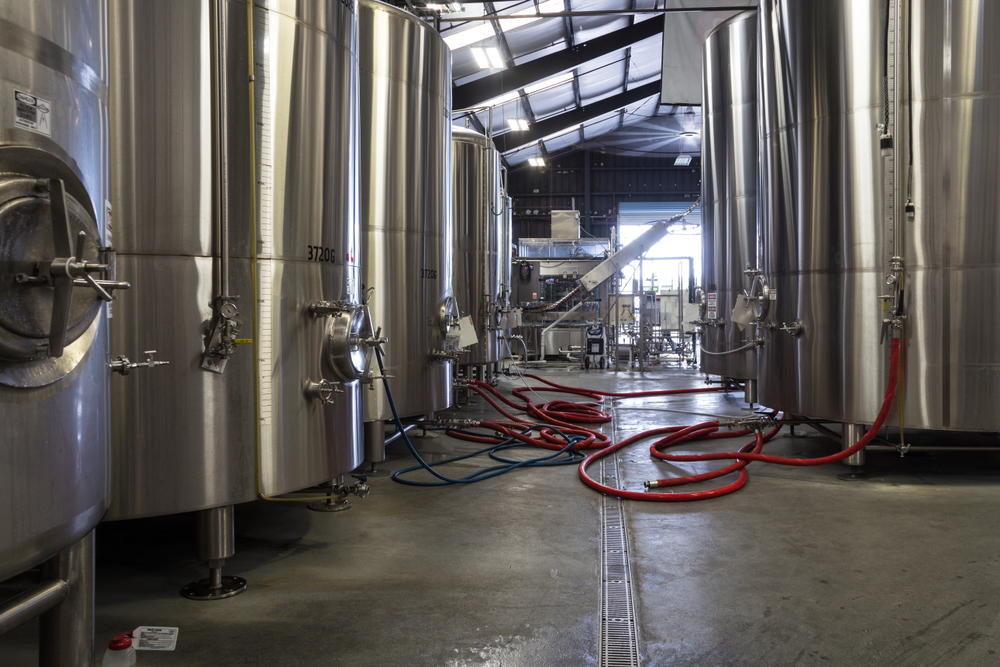
Breweries deal with a lot of water. Cleaning equipment, rinsing production areas, transferring liquids and everyday spills all put the floor and drainage under regular pressure. Brewery floor drains need to clear that water efficiently without leaving awkward wet areas around tanks, walkways or working zones.
We regularly install brewery flooring where the drainage is just as important as the finish. By looking at floor levels, drain positions and how the space is used together, we can build a practical system for day-to-day production and cleaning.
Quick Summary
Brewery floor drains should be planned around the areas that get wet, the volume of water being produced and the routes people and equipment take through the building. Good drainage systems also rely on correct floor falls and brewery flooring that is slip resistant, chemically resistant and easy to clean.
What Do Brewery Floor Drains Need to Deal With?
The brewing process involves water throughout production, while cleaning and washdown add plenty more. Water can carry yeast, product residue and cleaning products across the floor, so it needs a clear route into the drainage.
When we assess the space, we normally look at:
- Where washdown water and spills are likely to collect.
- How much water needs to be removed.
- Where tanks, pipework and fixed equipment will sit.
- The routes used by staff, kegs and trolleys.
- How the drains will be accessed for cleaning.
Those points help us choose sensible drain systems and position them where they will be useful.
Trench Drains, Slot Drains and Point Drains
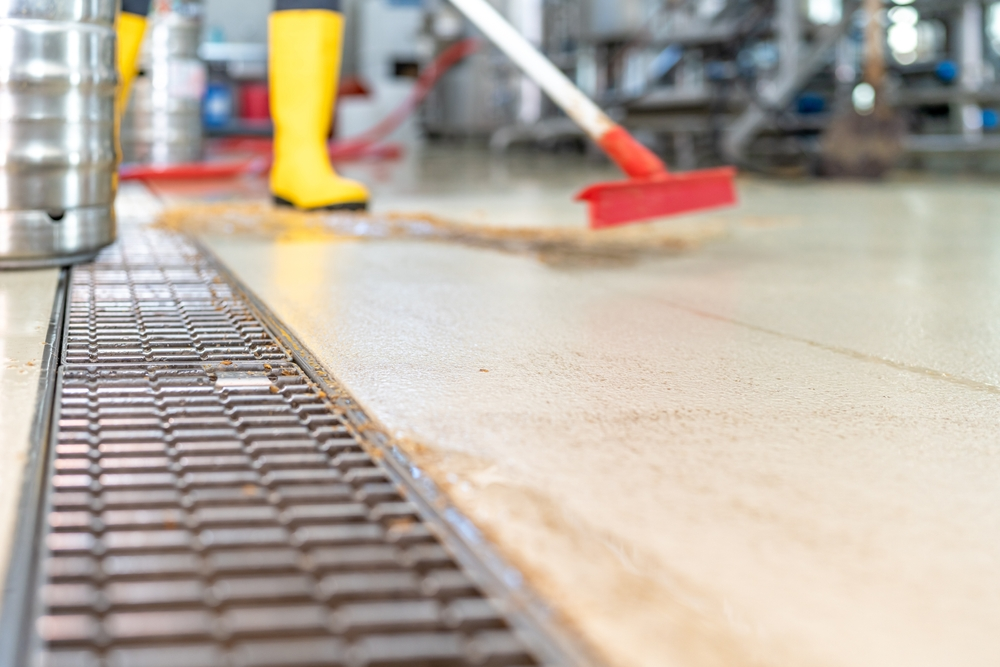
Different areas can need different arrangements. Trench drains suit spaces where water needs to be collected across a wider area, while slot drains offer a narrower opening through production zones and walkways. Point drains can work well where the floor directs water towards one location.
| Drain type | Typical area | Main benefit |
| Trench drains | Production and washdown areas | Collect water across a wider section |
| Slot drains | Walkways and production zones | Narrow opening with good access |
| Point drains | Localised wet areas | Useful where water is directed to one point |
Stainless steel drainage is commonly used in breweries because it is durable, corrosion resistant and suited to regular cleaning. The specification still needs to account for hot water, harsh chemicals and traffic from heavy equipment.
The Floor Needs to Send Water to the Drain
Even well-sized brewery floor drains will struggle if the surrounding floor sends water elsewhere. Low spots or poorly planned falls can leave standing water despite there being plenty of drainage capacity nearby.
Creating the Right Sloped Floor
A sloped floor needs enough fall to move water without making the space difficult for staff or wheeled equipment. We consider this alongside the brewery layout, so floor levels and drain positions are planned together.
Plan the Floor Before the Equipment Goes In
Floor levels and drainage are easier to alter before tanks, fixed pipework and production equipment are installed. On refurbishment projects, sections of the existing slab may also need to be opened so new drainage can be connected properly.
Our groundworks team can handle excavation, drainage pipework and preparation before the finished brewery flooring is installed, keeping these stages coordinated.
What Should Brewery Flooring Be Able to Handle?
Brewery flooring has to cope with more than water. Cleaning products, temperature changes, rolling loads, dropped items and regular foot traffic can all affect the floor over time. That is why floor systems need to be selected around the conditions in the brewery.
A suitable finish may need to be:
- Slip resistant in regularly wet areas
- Chemically resistant to cleaning products and process liquids
- Designed to withstand frequent cleaning and heavy use
- Easy to clean around equipment and drainage
- Hard-wearing under kegs and trolleys
- Suitable for changing temperatures
The Health and Safety Executive highlights wet and contaminated floors as a major cause of slips in food and drink manufacturing, so dealing with water quickly is also an important part of maintaining a safer working area.
Keeping Brewery Floor Drains Easy to Clean
Residue can collect around channels, gratings and floor-to-drain junctions if these details are difficult to access. That can make routine cleaning slower and leave more places that need attention.
EHEDG hygienic design guidance places a strong emphasis on cleanability in food production facilities. We take that into account when considering the drain design, access points and the way the flooring meets the drainage.
Planning Brewery Flooring and Drainage Together
We can look at brewery flooring, drainage, floor falls and the groundworks underneath as part of the same project. That gives us the opportunity to sort out levels, drain positions and connections before the finished surface goes down.
For a new production area or an existing brewery refurbishment, brewery floor drains should be based on how the space is used every day. Water volumes, cleaning routines, equipment positions and traffic routes all matter. Getting those details right gives the brewery a floor system that remains practical in the long term.
If you liked this, you may also like: Drainage System – Why Choose Stainless Steel Drains?
Frequently Asked Questions About Brewery Floor Drains
It depends on the size of the area, the amount of water being handled and where that water is coming from. Trench drains are often useful across larger washdown areas, while slot or point drains may suit more localised sections.
There is no fixed number. Drain quantity and positioning should be based on the brewery layout, expected water volumes, floor falls and where cleaning takes place most often.
Yes, although the existing slab may need to be cut or excavated so new drainage can be installed and connected. It is usually best to assess this before new equipment or flooring goes in.
Stainless steel drainage is durable, corrosion resistant and suitable for frequent cleaning. It also performs well in demanding environments where water, cleaning products and food or drink residues are regularly present.
In most cases, yes. A suitable floor fall helps water move naturally towards the drainage instead of collecting in low spots around the production area.
Yes, but the condition, height and position of the existing drains need to be checked first. If the drainage is poorly positioned or sits at the wrong level, it may make more sense to alter it before the new floor system is installed.
That depends on how wet the area becomes and the type of traffic using it. Production and washdown areas generally need more slip resistance than dry storage or office areas within the same building.
They can, provided the drainage system has been specified for those conditions. Materials, seals and surrounding flooring all need to cope with the temperatures and chemicals used during cleaning.
Cleaning frequency depends on how heavily the area is used and what is entering the drains. In busy production areas, regular cleaning helps prevent residue build-up, smells and reduced drainage performance.
Yes. We can look at the flooring, drainage, floor levels and associated groundworks as part of the same project, helping make sure the finished system works properly as a whole.