
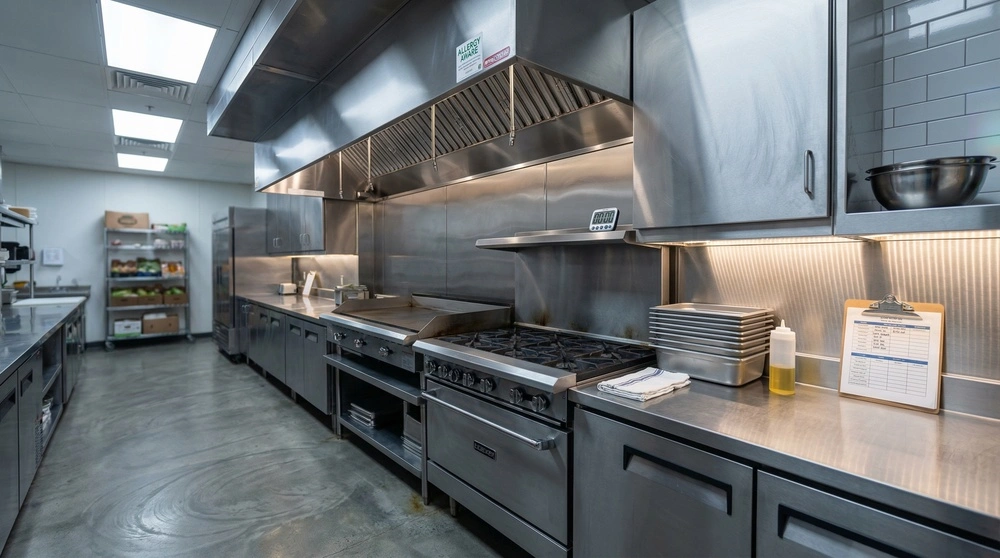
Food safe flooring is one of the most important parts of any food processing, production or preparation environment. It is walked on, washed down, exposed to spills, used by staff, crossed by equipment and expected to keep performing every day without becoming a hygiene problem.
For food businesses, flooring is never just a background detail. The wrong surface can become harder to clean, more likely to crack, more slippery under pressure and more expensive to put right later. The right hygienic flooring, however, helps create a safer, cleaner and more practical working environment from day one.
At Octego, we install flooring systems for food factories, commercial kitchens, cold rooms, breweries and other high-use environments where durability, hygiene and health and safety all matter.
Quick Summary
Food safe flooring needs to be hygienic, durable, slip resistant, chemical resistant and easy to clean and maintain. In food processing and commercial kitchen environments, resin floors are often chosen because they can handle heavy traffic, regular washdowns and demanding hygiene standards. A properly installed system also supports long term safety, compliance and operational efficiency.
Why Food Safe Flooring Matters So Much
In a food environment, the floor has to do more than survive footfall. It needs to support hygiene standards, reduce the risk of contamination and cope with a working day that may include moisture, grease, cleaning chemicals, temperature changes and machinery.
Cracks, joints, loose finishes and damaged surfaces can create areas where dirt and bacteria gather. Once that happens, cleaning becomes harder and the floor can quickly turn into a recurring maintenance issue.
A food safe flooring system should help with:
- Reducing the risk of slips and trips
- Supporting cleaning routines
- Standing up to heavy traffic
- Withstanding food production chemicals
- Creating a smooth, sealed and hygienic finish
- Protecting the long term condition of the workspace
This is especially important in food processing areas, where flooring has to perform reliably without interrupting daily operations.
What Makes Hygienic Flooring Different?
Hygienic flooring is designed for environments where cleanability and durability are critical. Unlike standard commercial flooring, it is usually installed as a sealed surface that can cope with frequent cleaning, moisture and physical wear.
A Surface Built Around Cleaning
A good floor should not fight against the cleaning team. It should be easy to clean and maintain, without awkward gaps, open joints or weak points that trap waste.
Why Seamless Finishes Help
Seamless resin floors are popular in food-safe environments because they reduce the number of places where dirt, grease and bacteria can settle. When combined with suitable coving, drainage and wall finishes, they can form part of a much cleaner and more practical space.
This is where floors and walls need to be considered together. Hygienic wall cladding, sealed junctions and well-planned flooring all work as part of the same environment.
Resin Floors For Food Processing Environments
Resin floors are often a strong choice for food safe flooring because they can be tailored to the specific use of the space. A bakery, brewery, commercial kitchen, cold room and food factory may all need slightly different performance levels.
The finish can be designed around slip resistance, cleaning demands, chemical exposure and the amount of heavy traffic passing through the area.
| Flooring Requirement | Why It Matters In Food Environments |
| Slip resistance | Helps reduce accidents in wet, greasy or high-use areas |
| Chemical resistant finish | Protects against cleaning products, spills and production chemicals |
| Seamless surface | Helps reduce dirt traps and supports hygiene standards |
| Durability | Handles heavy traffic, trolleys, equipment and daily use |
| Easy cleaning | Makes washdowns and routine maintenance more practical |
The best system depends on how the space is used, what is being produced and how the area is cleaned.
Food Safe Flooring In Commercial Kitchens
Commercial kitchens place a lot of pressure on flooring. They often have heat, moisture, grease, dropped utensils, regular cleaning and staff moving quickly through tight spaces.
This makes slip resistance especially important. A surface that is too smooth may become dangerous when wet, while a surface that is too rough can become harder to clean properly. The balance has to be right.
For commercial kitchens, a practical flooring specification should consider:
- How often the area is cleaned
- What cleaning chemicals are used
- Whether the floor needs falls to drainage
- How much foot traffic and trolley movement it receives
- Whether the flooring connects to hygienic walls or cladding
- How disruption can be reduced during installation
This is why food safe flooring should be planned early in the fit out, rather than treated as a final finish.
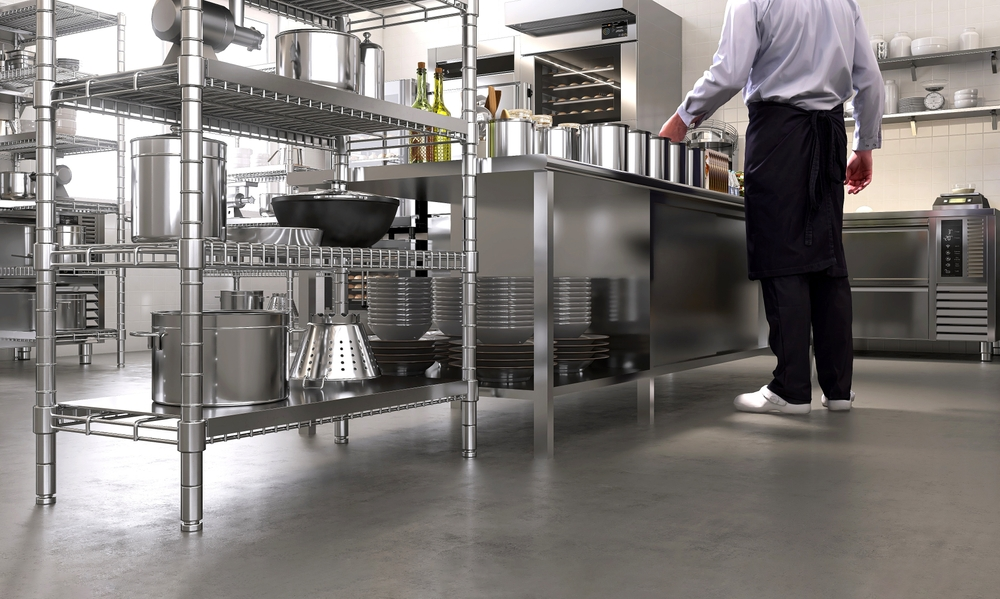
Reducing The Risk Of Future Problems
Poor flooring decisions often become expensive slowly. A small crack, failed joint or unsuitable finish may not feel urgent at first, but in a food environment it can quickly become a hygiene, safety or maintenance issue.
High performance flooring helps reduce the risk of:
- Water getting beneath the surface
- Bacteria building up in damaged areas
- Staff slipping on wet or greasy floors
- Cleaning chemicals damaging the finish
- Production downtime caused by repairs
- Replacing the floor sooner than expected
Looking at the long term is important. A cheaper flooring system may seem appealing at the start, but if it cannot cope with the environment, it may cost more in repairs, disruption and replacement.
Why Installation Quality Matters
Even the best flooring product can fail if it is installed badly. Preparation, moisture checks, surface condition, curing times, detailing around edges and drainage all affect the final result.
Food safe flooring is not just about the product chosen. It is about the full system and how it works within the space.
At Octego, we look at the environment as a whole. That includes flooring, hygienic cladding, drainage, cold rooms, partitions, ceilings and the practical demands of the working area. For food processing sites and commercial kitchens, this joined-up approach can make a real difference.
Food Safe Flooring That Works Beyond 2026
Food businesses are under constant pressure to keep spaces clean, safe, efficient and compliant. As hygiene expectations continue to rise, flooring needs to be chosen with future use in mind.
A strong food safe flooring system should support daily cleaning, health and safety, production demands and the long term performance of the building. It should be practical, durable and suited to the exact environment, rather than chosen as a generic finish.
If your food production area, commercial kitchen or hygienic workspace needs a flooring system that is built around real use, Octego can help plan and install the right solution from start to finish.
If you liked this, you may also like: Food Factory Flooring That Works as Hard as Your Production Line
Frequently Asked Questions About Food Safe Flooring in the UK
Food safe flooring is flooring designed for areas where food is prepared, processed, stored or handled. It needs to be hygienic, durable, easy to clean and suitable for the conditions of the space.
Resin flooring is often a strong choice for food processing areas because it can create a seamless, hard-wearing and hygienic surface. The best option depends on moisture levels, cleaning chemicals, traffic and drainage needs.
Yes, hygienic flooring is designed for environments where cleaning, safety and contamination control are especially important. Standard commercial flooring may not cope with regular washdowns, food waste, chemicals or heavy use.
Food production areas and commercial kitchens often deal with water, grease and spillages. Slip resistant flooring helps reduce the risk of accidents while still allowing the surface to be cleaned properly.
Yes, food safe flooring is commonly used in commercial kitchens because these areas need durable, washable and safe surfaces. It is especially useful where staff are moving quickly around wet or greasy areas.
A well-installed resin floor can last for many years, but it depends on the type of resin, preparation, traffic levels and cleaning routine. Regular inspections help spot small issues before they become bigger problems.
It should be. A good food safe flooring system is designed to reduce dirt traps, handle regular cleaning and support hygiene routines without becoming damaged too quickly.
Not always, but drainage is important in areas with washdowns, heavy spillages or wet processes. The floor may also need to be laid with suitable falls so water moves in the right direction.
Yes, cracks, gaps and failing surfaces can hold dirt, moisture and bacteria. In food environments, damaged flooring should be assessed quickly because it can affect both hygiene and safety.
Yes, especially in food processing, cold rooms and commercial kitchens. Flooring, hygienic wall cladding, coving and drainage work best when they are planned as one complete system.