
As a business grows, the way it uses its premises often changes. Ambient storage can form part of that change. Stock needs more room, packing activities spread into walkways and areas that once worked well become difficult to organise. Before considering a move, it is worth looking at whether your existing building could accommodate a more practical layout.
A dedicated room can give suitable goods their own space, separate storage from other activities and make everyday operations easier to manage.
The starting point is understanding what the room needs to hold, how people will use it and which conditions must be maintained.
Summary:
Ambient storage provides space for goods that do not require chilled or frozen conditions, but their storage requirements still matter. Purpose-designed ambient rooms can help businesses organise existing premises, using suitable panels, doors, flooring and services. The right specification depends on the products, working environment and level of environmental control needed.
What Is Ambient Storage?
Ambient storage generally refers to storing goods at temperatures suitable for products that do not need refrigeration or freezing. There is no single temperature range that suits every product, so the manufacturer’s storage instructions should guide the design.
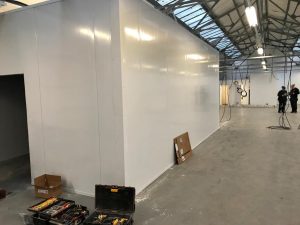
An ambient room is an enclosed space used to provide a dedicated environment within a larger building. It might house packaging materials, suitable dry goods or components that need organised storage away from surrounding activity.
Unlike a refrigerated cold room, it is not designed primarily to maintain chilled or frozen temperatures. However, “ambient” does not necessarily mean uncontrolled. Heating, cooling, ventilation or humidity management may still be needed to keep conditions within the required limits.
Insulated panels can help reduce heat transfer, but they do not independently maintain a fixed temperature.
When Could an Ambient Room Help Your Business?
An ambient room may be worth considering when storage and working activities begin competing for the same space.
Perhaps packaging is spread across several locations, incoming stock interrupts a packing station, or materials need clearer separation from nearby processes. Creating a dedicated ambient area can make responsibilities and storage locations easier to define.
Before planning the room, establish:
- What will be stored, and in what quantities?
- What conditions do those goods require?
- How often will staff need access?
- Will goods move by hand, trolley or pallet truck?
- Is the requirement permanent or likely to change?
Answering these questions helps determine whether an enclosed room is the most useful solution, or whether a simpler layout change would meet the need.
Making Better Use of Existing Warehouse and Commercial Space
Useful industrial storage solutions should improve how goods move through the building. A room that adds capacity but creates awkward access may introduce new delays.
Position matters. Storage for packaging could sit close to the packing operation, while frequently used components may benefit from easy access to the production area. Less frequently accessed stock might suit a different location.
Consider the room’s external footprint as well as its internal capacity. Doors need space to operate, handling equipment needs room to manoeuvre, and existing circulation routes must remain workable.
Well-planned warehouse partitioning can help divide a larger space into defined areas. Octego provides partition design and installation for commercial and industrial premises, including the creation of rooms within existing buildings.
The aim is a layout that supports daily work and leaves enough flexibility for future changes.
Choosing Insulated Panels, Doors and Flooring
The room’s components should be considered together. A suitable wall system will only deliver a practical result if the doors, floor and services also suit the intended use.
Insulated Panels and Internal Finishes
Insulated panels may be appropriate where reducing heat transfer or separating environments is part of the brief. Panel selection should also account for durability, cleaning requirements, fire performance and the supporting structure.
Where cleanable surfaces are needed, specify suitable finishes and carefully detailed junctions. An enclosed room should not automatically be described as a cleanroom or specialist controlled environment.
Doors and Everyday Access
Door dimensions should reflect the largest items and handling equipment expected to enter. Consider opening frequency, clearances and whether the layout allows goods to move without repeatedly striking frames or panels.
Flooring, Cleaning and Services
Choose commercial flooring around expected loads, traffic and cleaning methods. Plan lighting, power and ventilation alongside the room itself, with access retained for inspection and maintenance.
Environmental controls and monitoring should be included where the stored products require them.
Where Commercial Ambient Rooms Could Be Used
Commercial ambient rooms can support different activities, provided their specification matches the goods or processes involved.
| Sector | Potential application |
| Warehousing | Dedicated storage for suitable stock, packaging or order fulfilment materials |
| Manufacturing | Organised component storage or a separate area for suitable packing activities |
| Food production | Storage for appropriate dry ingredients, sealed products or packaging, following their specified conditions |
| Pharmaceutical businesses | Storage for suitable products or materials under the environmental conditions required for that particular use |
For food businesses, the proposed room must be assessed against the needs of the actual ingredients or products. Not every preparation activity or food item is suitable for ambient conditions.
Similarly, pharmaceutical storage should follow product-specific requirements. Medicines that do not need refrigeration can still be affected by excessive heat or unsuitable storage conditions.
Planning Ambient Storage for Long-Term Use
Think beyond the first delivery of stock. Seasonal peaks, new equipment and changes in working practices can alter what the room needs to accommodate.
A practical planning checklist should include:
- Enough access for cleaning and inspecting less visible areas.
- Safe entry and exit arrangements.
- Space for shelving, goods handling and routine stock checks.
- Access to lighting, ventilation and other services for maintenance.
- The effect of the new room on surrounding operations.
- Whether future alterations can be accommodated.
Discuss installation around existing activities too. Deliveries, staff movements and equipment may affect the sequence of work.
Allowing for these details early can reduce the likelihood of needing disruptive alterations shortly after the room comes into use.
Plan Your Commercial Fit-Out With Octego
Octego’s experience in commercial fit-outs brings together partitioning, flooring, hygienic finishes and wider refurbishment work. With more than 40 years of industry experience, our team can help businesses assess how their premises could better support their operations.
If you are exploring ambient storage, start by discussing what you need to store, the available space and any environmental requirements. These details provide the basis for a suitable room specification and layout.
Explore our commercial fit-out services or contact Octego to discuss your refurbishment requirements across Sussex and the South East.
Call 01444 405269 to speak to our team.
If you liked this, you may also like: Commercial Fit Out Contractors for Warehouses in 2026
Ambient Storage FAQs
What Is Ambient Storage Used For?
Ambient storage is used for goods that can be kept under suitable non-chilled and non-frozen conditions. Examples may include packaging, components and certain dry products. The required temperature, humidity and other conditions depend on the specific items being stored.
How Does an Ambient Room Differ From a Cold Room?
A cold room uses refrigeration to maintain specified chilled or frozen conditions. An ambient room serves goods or activities that do not require those conditions, although heating, cooling or other environmental controls may still be necessary.
Does Ambient Storage Mean a Fixed Temperature?
No. “Ambient” does not identify one universal storage temperature. The acceptable conditions should be established from the product requirements, then used to determine whether the room needs temperature control and monitoring.
Can an Ambient Room Be Installed Inside an Existing Warehouse?
It may be possible, subject to a site assessment. Available space, building condition, access, services and the effect on surrounding operations all need consideration. The proposed room should improve the layout without creating new circulation or handling problems.
Why Might Insulated Panels Be Used for Ambient Storage?
Insulated panels can help reduce heat transfer between the room and its surroundings. They may also provide suitable internal finishes. Their use should follow the room’s specification, and insulation alone does not guarantee stable temperature or humidity.
What Doors and Flooring Should an Ambient Room Have?
Doors should accommodate the goods, staff and handling equipment using the room. Flooring should suit the expected loads, traffic and cleaning methods. Both should be planned alongside the layout to avoid awkward thresholds, restricted access or difficult maintenance.
Does an Ambient Room Need Ventilation?
Ventilation needs should be assessed during design. Occupancy, stored materials, heat from equipment and moisture can all affect the specification. Enclosing an area changes airflow, so the existing building’s ventilation should not automatically be assumed sufficient.
Can Ambient Rooms Be Used by Food or Pharmaceutical Businesses?
Yes, where the room and its operating conditions are suitable for the particular goods or activities. Product storage instructions and sector-specific requirements must guide the design. An ordinary insulated room should not be assumed suitable for every food or pharmaceutical application.
Can an Ambient Room Be Adapted as a Business Grows?
Some room systems and layouts can accommodate later changes, but this depends on their construction, services and available space. Discuss likely growth during planning so future access, capacity and alterations can be considered from the beginning.
What Affects the Cost of an Ambient Storage Room?
Costs depend on room size, panels, doors, flooring, existing building condition and installation access. Lighting, ventilation, environmental controls and monitoring can also affect the budget. A quotation should be based on a defined use and site assessment.