
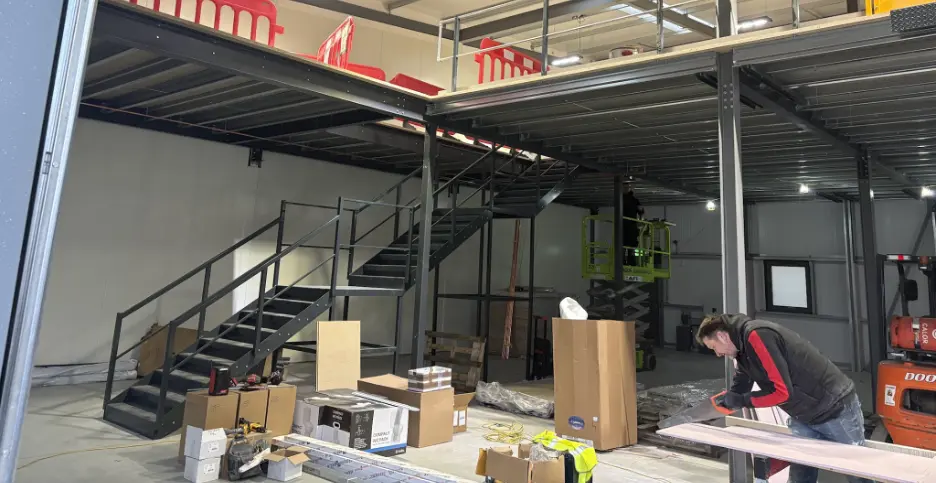
A warehouse fit out should make the building work harder, safer and more efficiently for the people using it every day. Whether you need more warehouse storage, a mezzanine floor, pallet racking, hygienic cladding, office spaces or practical groundwork services, the right fit out project is about more than adding features to an empty shell. It needs planning, sequencing and a practical understanding of how the space will actually be used.
Quick Summary
A warehouse fit out can turn an underused building into a practical, fully compliant working environment. Octego can support projects from start to finish, including mezzanine floors, pallet racking, hygienic cladding, office spaces, groundwork services and project management. The best results come from understanding storage, access, health and safety, hygiene and traffic flow before work begins.
What a Warehouse Fit Out Can Include
Every warehouse is different, so a warehouse fit out should be shaped around the business using it. Some sites need better storage capacity. Others need staff facilities, production areas, loading improvements or specialist finishes.
Common warehouse fit out elements include:
- Mezzanine floor installation to create extra usable floor space
- Pallet racking and warehouse storage systems
- Hygienic cladding for cleanable wall and ceiling areas
- Office spaces, restrooms, welfare areas and break rooms
- Groundwork services for access, drainage, bases or external works
- Ventilation, ducting and practical service routes
- Safety features, signage and compliance-led access planning
The aim is to make the warehouse space easier to use without creating dead space or awkward working areas.
Why Groundwork Services Matter Before the Build Starts
Groundwork services are often one of the least visible parts of a warehouse fit out, but they can affect everything that follows. Poor levels, weak bases, awkward drainage or unsuitable access points can slow a project down and create problems once the building is operational.
For some projects, groundwork may include concrete bases, drainage channels, external access improvements, service preparation or practical changes around loading and movement. This matters when fitting out warehouses that need cold rooms, washdown areas, food-safe finishes, heavy storage or machinery.
Getting the groundwork right gives the rest of the project a stronger base.
Planning Storage, Access and Workflow Properly
A good fit out project starts with questions about how the site works. How are goods delivered? Where do staff move through the building? What needs to be stored at height? Which areas must stay clear for forklifts, pallet trucks or pedestrian access? Are there hygiene requirements?
A practical planning process usually includes:
- Assessing the existing warehouse space and how it is currently used
- Identifying storage, access, welfare, hygiene and operational requirements
- Planning the sequence of work so trades can operate safely and efficiently
- Designing around health and safety from the start
- Managing installation so the result is practical, durable and fully compliant
This is especially important when combining several areas, such as a mezzanine floor above storage, pallet racking near loading zones, hygienic cladding in production areas and office spaces within the same building.
How Different Fit Out Elements Work Together
A warehouse fit out is strongest when every part of the building has been considered together. Installing one feature without thinking about the rest of the space can lead to issues with access, maintenance, safety or future growth.
| Fit out element | Why it matters |
| Mezzanine floor | Creates extra usable space without needing a larger building |
| Pallet racking | Improves storage layout and stock access |
| Hygienic cladding | Supports easier cleaning in production or washdown areas |
| Office spaces | Gives teams practical working and admin areas |
| Groundwork services | Prepares the site for safe and stable installation |
| Project management | Keeps trades, timings and compliance aligned |
The best warehouse fit out projects feel joined up because the planning has been joined up. That means considering safety regulations, cleaning, access, storage loads, staff movement and future changes before work is underway.
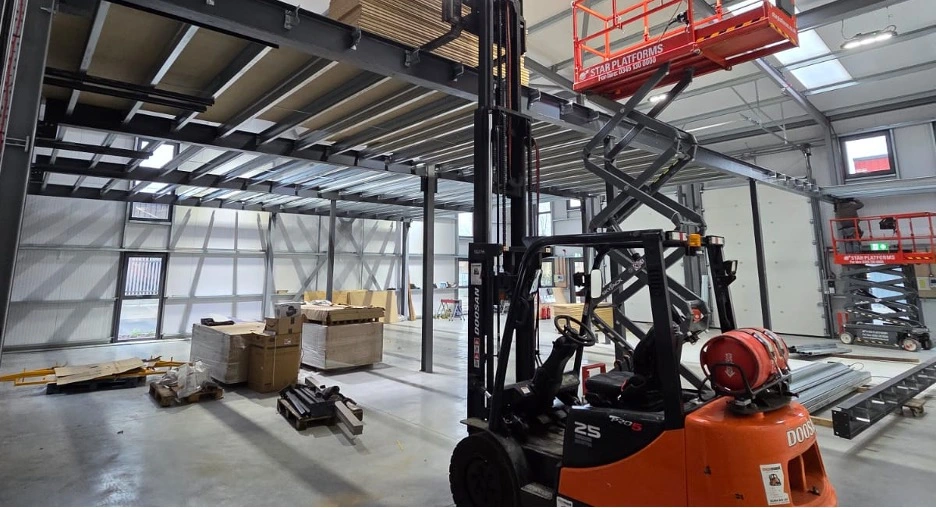
Health and Safety Should Shape the Whole Fit Out
Health and safety should never be something added at the end of a warehouse fit out. It needs to influence the layout, materials, access routes, installation method and final checks.
A warehouse environment can include working at height, moving vehicles, heavy loads, stored goods, production areas, staff facilities and public-facing delivery routes. Each of these can affect the layout and installation process.
Managing Compliance Throughout the Project
A fully compliant warehouse fit out needs clear planning from the early stages. It is much easier to design safe access, suitable layouts and sensible working areas before installation begins than to correct avoidable problems later.
Planning the Sequence Properly
A busy warehouse fit out can involve several trades working around structural elements, flooring, cladding, racking, electrical work, ventilation and welfare areas. Strong project management helps make sure work happens in the right order, with the right controls in place.
Checking Access, Loads and Working Areas
A mezzanine floor needs suitable access. Pallet racking needs to be positioned with movement and safety in mind. Hygienic cladding needs to support cleaning. Office spaces need sensible positioning and integration with the wider warehouse environment.
These details are not always the most visible part of the finished project, but they often make the biggest difference once the site is in daily use.
Why Choose Octego for a Warehouse Fit Out?
We work on practical commercial and industrial fit out projects where the details matter. A warehouse is a working environment where storage, movement, hygiene, staff facilities, safety regulations and long-term use all need to line up properly.
We can support a warehouse fit out from start to finish, helping with project management, internal works, mezzanine floor installation, pallet racking considerations, hygienic cladding, office spaces and associated groundwork services where required.
The right warehouse fit out should make the building more useful, more compliant and better suited to the business inside it.
If you liked this, you may also like: Food Factory Flooring That Works as Hard as Your Production Line
Frequently Asked Questions About A Warehouse Fit Out That Makes Better Use of Your Space
A warehouse fit out can include mezzanine floors, pallet racking, office spaces, welfare facilities, hygienic cladding, flooring, lighting, ventilation and internal layout changes. The exact work depends on how the building is used. A good fit out should improve storage, access, safety and day-to-day workflow.
A mezzanine floor is usually worth considering if you have unused height in the building but need more usable space. It can help create extra storage, production areas, office space or staff facilities without moving premises. The design needs to consider loading, access, fire safety and how people will move around the site.
Groundwork services help prepare the site properly before internal work begins. This may include concrete bases, drainage, external access, service routes or floor preparation. Getting this right early can prevent delays, uneven layouts or practical problems later in the project.
Yes, pallet racking can be planned as part of a wider warehouse fit out. This is often better than treating racking as a separate afterthought because storage, forklift routes, loading areas and pedestrian access all need to work together. Proper planning also helps support health and safety compliance.
A fully compliant warehouse fit out considers building regulations, fire safety, access, working at height, storage loads, safe movement routes and suitable materials. Compliance depends on the type of work being carried out and how the space will be used. This is why early planning and experienced project management are important.
The timescale depends on the size of the warehouse, the complexity of the works and whether the site remains operational during the project. A simple storage or office upgrade may be relatively quick, while mezzanine floors, hygienic cladding, groundwork services and multiple trades will usually take longer. A proper schedule should be agreed before work starts.
In many cases, yes, but it needs careful planning. Work may need to be phased to protect staff, stock, vehicles and production areas. Clear access routes, communication and project management make a big difference when a live site needs to stay functional.
Hygienic cladding is useful in areas where surfaces need to be easy to clean, moisture resistant or suitable for food-related environments. It is often used in production areas, washdown zones, cold rooms and food handling spaces. The right finish can help support hygiene standards and reduce maintenance issues.
Before starting, it is important to understand storage needs, access routes, staff facilities, vehicle movement, safety risks, hygiene requirements and future growth. The existing warehouse space should also be assessed properly. This helps avoid layouts that look good on paper but do not work well in practice.
Using one contractor for the full fit out can make the project easier to coordinate. It helps keep communication, sequencing, safety and quality control more consistent. This is especially useful when the work includes several elements, such as groundwork services, mezzanine floors, pallet racking, cladding and office spaces.